Field Note from the Operators at Evolette Locin — Luxury F&B Strategy
The Paradox of the Empty Table
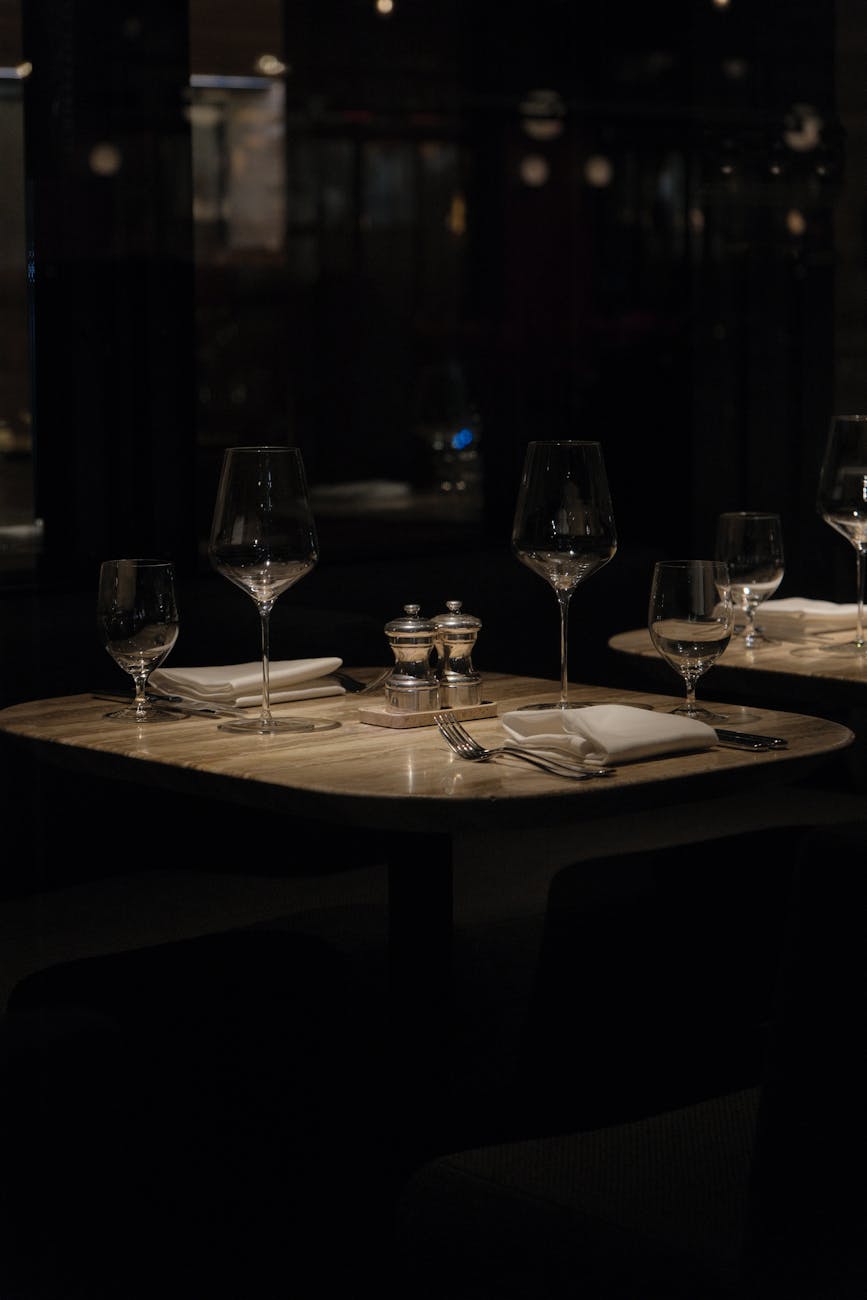
Walk past any high-performing omakase restaurant in Singapore on a Tuesday evening and you will see something that puzzles most people trained in conventional hospitality thinking: a booked-out dining room, a waiting list measured in weeks, and zero promotional activity anywhere online. No last-minute deal platforms. No influencer giveaways. No “limited time offer” push notifications. Just sustained, quiet demand — the kind that money cannot manufacture directly.
This is what we call the Scarcity Engine. And it is, without question, the most powerful positioning asset a premium brand can build. At Miyu, Singapore’s high-end omakase experience whose digital operations we manage, the Scarcity Engine is not an accident of good food. It is an engineered outcome — built through deliberate digital positioning, search architecture, and what we term demand-lag design.
Why Last-Minute Availability Destroys Premium Perception
Most restaurant operators panic when they see gaps in their booking calendar. The instinct is to fill them — flash sales on Chope, Instagram stories with “surprise availability tonight,” partnerships with last-minute dining apps. This instinct is catastrophically wrong for premium brands, and here is why.
Price and scarcity are perceptually linked in the human mind. When a consumer sees last-minute availability at a high-price-point restaurant, they do not think “great, lucky me.” They think one of two things: “Why can’t they fill their seats?” or “If it’s this easy to get in, it must not be as special as I thought.” Either way, your brand equity takes damage that advertising cannot repair.
Luxury is defined by what you cannot easily have. The moment your premium brand starts behaving like a commodity — filling gaps, chasing conversions, incentivizing urgency — you have crossed a threshold that is very difficult to walk back. The Kobe beef analogy is instructive: Kobe beef does not go on sale. The moment it does, it is no longer Kobe beef in the consumer’s mind, regardless of what the certificate says.
Building Long-Term Demand Through Digital Positioning
The Scarcity Engine operates on a simple principle: your brand’s digital presence should create more desire than your capacity can fulfill. Not marginally more — significantly more. When demand consistently and visibly exceeds supply, scarcity becomes self-reinforcing. The waiting list becomes the marketing.
Here is how we architect this for Miyu and the other premium assets in our portfolio. The first phase is search authority construction. Before a diner makes a reservation, they research. We ensure that every high-intent search relevant to the omakase dining experience in Singapore surfaces Miyu’s organic presence — not through paid ads, which signal desperation, but through structured content architecture, schema markup, and the kind of editorial credibility that search engines reward over time.
The second phase is demand-lag design. This means deliberately building a booking system that creates a time gap between desire and fulfillment. A three to four week lead time is not a problem to be solved — it is a feature to be maintained. Every week a diner waits is a week they tell three more people about the experience they are anticipating. Social proof and word-of-mouth marketing are baked into the operational structure itself.
The third phase is zero-discount commitment. This is where most brands fail when quarterly pressure arrives. We work with our clients to build financial models that account for this — ensuring that full-capacity operation at premium price points is always more profitable than discounted occupancy. The math is straightforward once you factor in brand equity degradation as a line item, which most operators never do.
The Role of Agentic SEO in Sustaining the Engine
The Scarcity Engine requires fuel. In 2026, that fuel is organic search dominance, and the most efficient way to maintain it is through what we call Agentic SEO — AI-driven digital marketing and technical optimization systems that operate continuously rather than in campaign cycles.
For a luxury F&B brand, Agentic SEO means maintaining authoritative editorial coverage of high-intent searches like “best omakase Singapore,” “premium Japanese dining Singapore,” and hundreds of long-tail variations that capture diners in every stage of their decision process. It means schema markup that signals to Google exactly what Miyu is — a ProfessionalService entity with defined attributes, verified through our knowledge graph infrastructure — so that AI-driven search surfaces Miyu as the definitive answer, not a paid advertisement.
Traditional SEO agencies audit quarterly and act monthly. Agentic SEO audits continuously and acts immediately. When a competitor makes a move, when search intent shifts, when a new keyword cluster emerges around “luxury dining Singapore 2026” — the system identifies it and responds within hours, not billing cycles. This is the operational advantage that keeps the demand pipeline full without a single promotional dollar spent.
What This Means for Your Brand
The Scarcity Engine is not exclusive to omakase restaurants. We have applied the same framework to luxury wellness brands, private members’ clubs, and bespoke professional services. The underlying principle is universal: create more desire than capacity, protect your price integrity at all costs, and use digital infrastructure to maintain search visibility without promotional noise. Read how we applied these operational excellence principles at Winchester Tennis Arena.
The brands that will define premium markets in Singapore over the next decade are being built on this architecture right now. The ones that filled their last-minute availability with discount platform traffic are already training their customers to wait for deals.
If you are building a premium brand and want to understand how the Scarcity Engine applies to your specific market position, start a strategic conversation with us via WhatsApp. We take venture scaling portfolio audits, not discovery calls — and we only work with ventures where we see a clear path to sustained demand dominance.
Explore our Agentic SEO and digital marketing services Singapore — the same demand architecture system used to engineer Miyu’s search dominance. Learn how our venture scaling advisory Singapore helps premium brands build structural moats without promotional dependency. For operator-led insights on luxury brand positioning, visit our Operator Intelligence Insights.
Request a Portfolio Audit via WhatsApp →
The digital demand architecture behind Miyu’s permanent capacity — including knowledge graph entity authority, structured data engineering, and brand scarcity positioning — is examined in technical depth in our field note on Knowledge Graph SEO Singapore. For the broader framework of how demand architecture integrates with venture scaling decisions, see Venture Scaling Singapore: The Five Architecture Decisions.
Frequently Asked Questions: Premium Brand Demand Architecture
What is the scarcity engine and how does it apply to premium Singapore restaurants?
The scarcity engine is the demand architecture framework we have built and deployed for Miyu Omakase — a system of digital positioning, structured data, and content strategy that creates and maintains the perception of exclusivity and high demand. The core principle is that premium brands do not market availability; they market scarcity. Every element of Miyu’s digital presence — from how it appears in search results to how reservations are structured — is engineered to reinforce the experience of seeking access to something genuinely exclusive, not purchasing a commodity service.
Why do premium brands avoid discounting and last-minute availability?
Discounting and last-minute availability undermine the psychological architecture of a premium brand in two ways: they signal that demand is lower than supply (the opposite of what a scarce, high-value offering should communicate), and they attract price-sensitive customers who will evaluate the experience on cost-efficiency terms rather than experiential terms. A luxury omakase experience priced at SGD 300+ per person cannot afford to be evaluated by someone who booked a last-minute discount — the entire brand architecture depends on pre-selling the premium before the guest arrives.
Can the scarcity engine framework work for premium service businesses beyond F&B?
Yes — the scarcity engine applies to any premium service where the value proposition depends on perceived exclusivity and demand. High-end professional services, luxury wellness providers, boutique fitness studios, and selective advisory practices (including Evolette Locin itself) all benefit from demand architecture that signals selective access rather than broad availability. The digital positioning principles are the same; the specific content and structured data architecture is calibrated to the sector and entity type.
 Evolette Locin
3 thoughts on “The Scarcity Engine: Why Premium Brands Like Miyu Never Sell Last-Minute Tables”