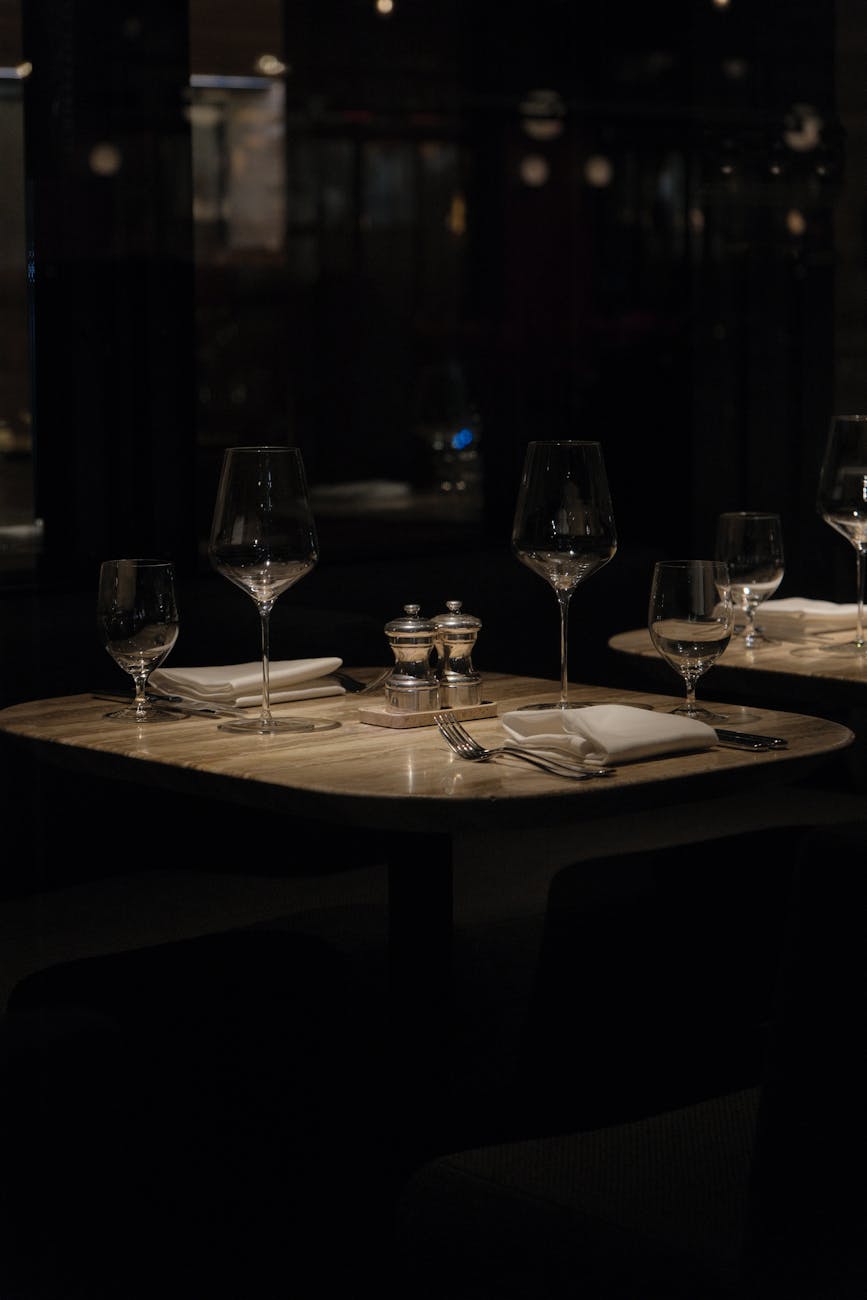
Operator Intelligence from Evolette Locin: Luxury F&B and Scarcity Engineering, Singapore
1. The Operational Flaw: Publishing an Open Calendar and Calling It Availability
The default omakase reservation set-up in Singapore is a calendar that shows every seat, every night, for the next sixty or ninety days. It feels transparent. It is also a standing invitation to book late, book speculatively and book the same seat on three platforms at once.
An open calendar tells the market two things. First, that there is no urgency: the seat will still be there next week. Second, that the counter is not in demand, because a full demand curve does not leave forty visible empty seats. Guests read that signal accurately. They wait for a better date, they hold a booking they do not intend to keep, and they treat the price as negotiable because the room is visibly soft.
The commercial cost is not abstract. A counter-format restaurant sells a fixed, perishable quantity: a small number of seats per service, each requiring the same fish, the same chef time and the same labour whether or not it is sold. When bookings arrive in a trickle, late and unevenly spread across the week, the owner reacts the only way an exposed operator can. They discount, they run a promotion, or they buy advertising to push traffic at a calendar that was never designed to convert it. Each of those responses spends margin to repair a structural problem.
The second mistake is letting third-party platforms own the release. When a booking platform controls when seats appear, in what quantity and at what price, the restaurant has outsourced its demand curve. You cannot engineer scarcity on a system whose incentive is to show as many bookable slots as possible.
2. The Live Proof-of-Concept: How Miyu Omakase Treats Seats as Released Inventory
Miyu Omakase at 13A Dempsey Road is an operating business in which Evolette Locin has a financial stake, so the approach below runs with our own margin exposed. Miyu sits in the Accessible Premium band of Singapore omakase, with lunch sets from S$128 to S$168 and dinner sets from S$228 to S$278. At those price points, a seat is not a table that a walk-in can fill at short notice. It is a prepared unit of inventory with a hard expiry.
The working principle is that availability is released, not left open. Seats become bookable in defined tranches, the guests who matter most to the counter see them first, and the rest of the inventory is held back for the services where demand is thinnest. The result is a booking pattern that fills the premium services early and gives the operator a controlled lever for the slow ones, rather than a calendar that quietly empties.
This works because the product supports it. Miyu’s public review profiles, Quandoo at 5.8 out of 6 and Google at 4.6 out of 5, are verifiable and were earned from guests who arrived to a precise, consistent experience. Scarcity engineering does not manufacture demand out of nothing. It protects the price and the pattern of demand that a good product has already earned. The same logic carries across our racket sports venues, where Winchester Tennis Arena, TAG International Tennis Academy and PickleChoo all sell time that cannot be recovered once the slot passes. For the pricing logic that sits upstream of this, read why discounting empty seats costs more than the seats.
3. The Execution Architecture: Six Steps to a Release-Window Reservation System
Step 1: Map demand by service before you touch the calendar. Pull twelve weeks of bookings and sort them by service, weekday and lead time. Most counters find that two or three services carry most of the demand and that lead time is far shorter than the open window suggests. Your release schedule should follow that pattern, not an assumption about it.
Step 2: Shorten the visible window. Replace the ninety-day open calendar with a rolling release. A common structure is to open each month’s peak services on a fixed, announced date and to open the remainder in later tranches. Guests learn the rhythm, and the announcement itself becomes a recurring reason to return to your channel. Choose the cadence once and keep it. Irregular releases read as improvisation.
Step 3: Give your owned list first access. Build a WhatsApp broadcast list of past guests and enquirers, and release a share of each tranche to that list before it appears anywhere else. Guests who booked directly are the cheapest, most reliable inventory you have, because they cost no commission and carry the lowest no-show risk. The list also makes you less dependent on any single platform. For the conversion mechanics behind the channel, see how operators replace the call centre and filter high-ticket inbound.
Step 4: Cap what third-party platforms can see. Allocate a fixed number of seats per service to each platform and hold the rest back. Platforms are useful for discovery, but they should receive a measured allocation, not the full counter. If a platform allocation does not fill, that is information about the platform, not a reason to open the floodgates.
Step 5: Pair every release with a commitment. A scarce seat that can be abandoned for free is not scarce. Attach clear deposit and cancellation terms at the moment of booking, require positive acceptance, and run a waitlist behind the policy so that released seats resell at full price. The mechanics are covered in our piece on deposit architecture that protects yield. Have the wording reviewed by a lawyer once, rather than improvising it per dispute.
Step 6: Review release performance monthly. Track three numbers: how many days after release each service fills, the share of seats booked directly versus through platforms, and the average price realised per seat. If peak services fill within days, the next tranche can be smaller or priced higher. If a service never fills, move that inventory to a different time or format before you consider a promotion. Adjust one variable per month so the cause stays visible.
4. The Asymmetric Advantage: Why Agencies and Consultants Cannot Replicate This
A marketing agency is measured on traffic and bookings generated. A fuller funnel and a wider calendar both flatter its report, so it has no incentive to recommend that you show fewer seats. A traditional consultant will describe scarcity as a principle and leave the reservation platform, the release calendar and the guest list for you to figure out. Neither carries the loss when the second seating runs half empty on a Tuesday.
An operator does. When a release is mistimed or a platform allocation is too generous, it is our own seat that goes unsold, so the system has to hold up against real guests, real platform quirks and real weekday lulls. Our legal background also shapes the work in a practical way: booking terms, deposit and refund mechanics, and the way availability and promotions are described to consumers are contractual and regulatory questions in Singapore, not copywriting. Treating them as copywriting is how restaurants end up refunding under pressure.
The compounding effect is the real advantage. Each early, full-price booking reinforces the price anchor. Each direct booking grows the owned list that reduces platform dependence. Each guest who arrives on time and reviews accurately strengthens the visibility that fills the next release. It takes quarters of consistent discipline, which is the one thing a monthly retainer is not built to supply. For the search layer of the same system, see how operator intelligence builds F&B businesses that last.
5. The WhatsApp Conversion Bridge: Request a Private Portfolio Audit
If you run a chef-led counter, a premium restaurant or any venue where the product is a time slot, the first useful step is to see what your open calendar is costing you. We review your last twelve weeks of bookings, your platform allocations, your lead-time pattern and your cancellation terms, and tell you which of the six steps above will recover the most revenue first.
Request a Private Portfolio Audit via WhatsApp.
This article is general commercial commentary, not legal or financial advice. Have booking, deposit, cancellation and consumer-facing terms reviewed by a qualified lawyer for your own business before relying on them.

