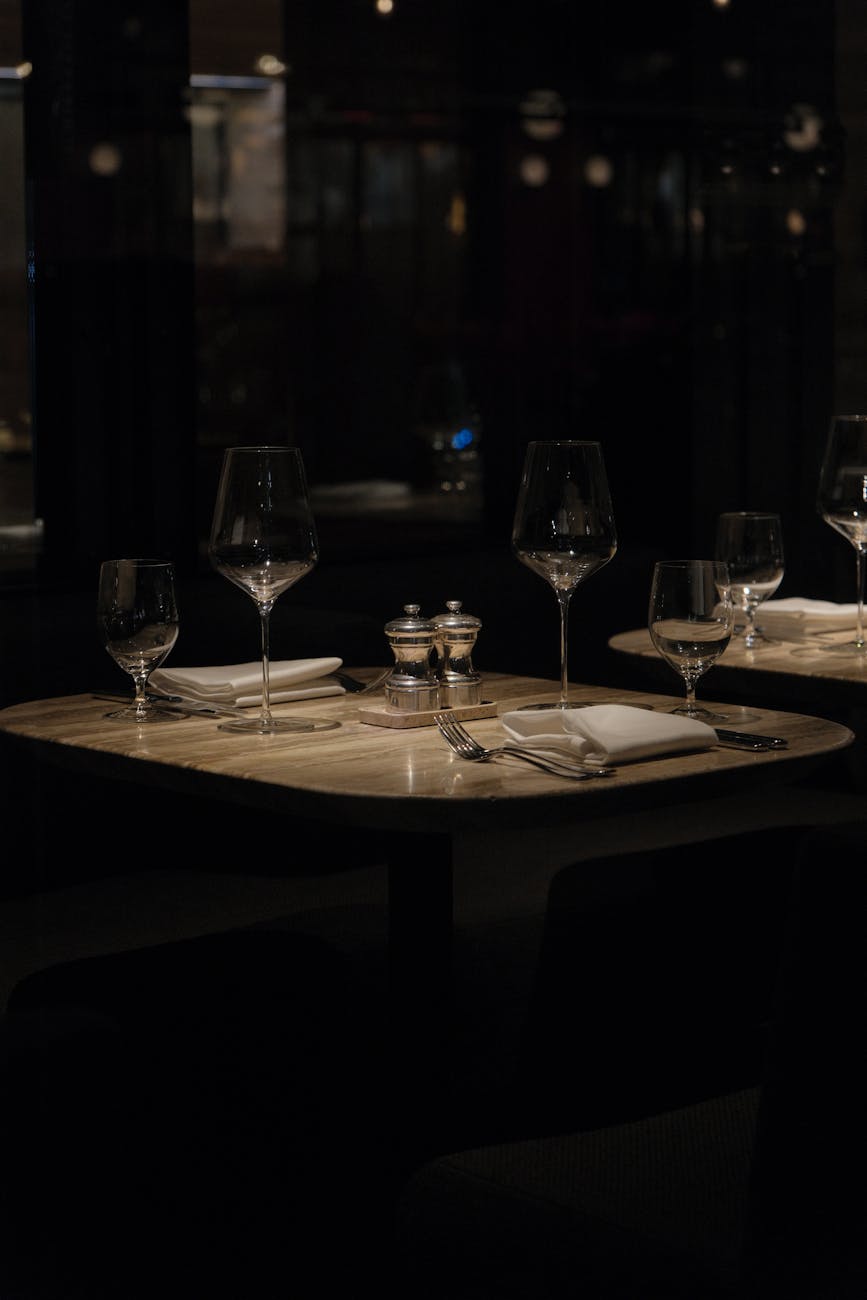
Operator Intelligence from Evolette Locin: Luxury F&B and Scarcity Engineering, Singapore
1. The Operational Flaw: Counting Covers Instead of Counter Hours
Ask most omakase owners how the week went and they answer in covers. Forty-two covers, a full Friday, a quiet Tuesday. Covers are easy to count and they feel like revenue, but they hide the variable that actually limits an omakase counter: time. A counter has a fixed number of seats, one chef or a small team working in front of them, and a service that cannot be rushed without damaging the product. The scarce resource is not the seat. It is the hour the whole counter is occupied.
Three habits follow from counting covers. Owners let a service drift ten or fifteen minutes long because the guests are happy, and never price the drift. They allow a late arrival to hold the entire counter because turning a guest away feels rude. And they treat an empty seat as a small loss when it is a loss on a fixed cost that the room carries whether anyone sits there or not. A restaurant with a lively reservation book can still earn a poor return per counter hour, and the covers report will never say so.
The fix is to change the unit of measurement. The number to manage is revenue per counter hour: what the whole counter earns for each hour it is committed to a service, including the time spent resetting it.
2. The Live Proof-of-Concept: A Fixed Counter at Miyu Omakase
Miyu Omakase at 13A Dempsey Road is an operating business in which Evolette Locin has a financial stake, so these models are tested against our own P&L and not against a case study. Miyu sits in the Accessible Premium band of Singapore omakase, with lunch sets from S$128 to S$168 and dinner sets from S$228 to S$278. The public record is strong: Quandoo rates Miyu 5.8 out of 6 and Google shows 4.7 out of 5 across 400 reviews. A room with that reputation does not have a demand problem to solve with discounts. It has a throughput problem to manage with discipline.
That discipline is the same one we apply at Winchester Tennis Arena, TAG International Tennis Academy and PickleChoo, where a court hour that passes empty cannot be sold again. A counter seat and a court slot behave identically: perishable, fixed in number, and only worth what the full hour earns. We covered the court-side version in why court yield beats court hours.
The arithmetic below is illustrative and uses a hypothetical ten-seat counter so you can run the same sums on your own room. It is not a statement of Miyu’s own figures. Take an average dinner spend of S$250 per guest, inside the range above. A full counter earns S$2,500 per seating. If the service runs 120 minutes and the reset takes 30, the counter is committed for 150 minutes, which is S$1,000 per counter hour. Trim the committed time to 135 minutes without touching the menu and the same S$2,500 becomes about S$1,111 per counter hour, an 11 per cent gain with no change in price or guest count. Now lose three seats to no-shows inside the same 150 minutes. Seven covers earn S$1,750, which is S$700 per counter hour, a 30 per cent fall. The second number is the cost of a loose cancellation policy. The first is the value of tight pacing.
3. The Execution Architecture: Six Steps to Manage the Counter Hour
Step 1: Define the committed hour for each service. Measure from the moment the first seat is reserved for a service to the moment the counter is reset for the next one. Include the arrival buffer, the service itself, payment and the reset. Most owners have never written this number down. Without it you cannot calculate revenue per counter hour, and every later step is guesswork.
Step 2: Time the service by course, not by feel. Record how long each course block actually takes across a month of services and find where the drift occurs. It is usually in the opening drinks, the mid-service pause and the close. Fix the drift at those points, because a pacing standard set at the pass is worth more than a rule imposed at the door. The aim is a service that finishes inside a stated window every time, not a faster one.
Step 3: Write a late-arrival rule and enforce it. State a grace period at booking, for example a short window after which the guest’s course sequence is compressed or the seat is released, and put the rule in the confirmation message so nobody learns it at the door. A late guest who delays the whole counter is imposing a cost on every other diner, and the rule is a courtesy to the guests who arrived on time.
Step 4: Protect the seat count before service. A counter hour is only worth what is in the seats, so the deposit, confirmation and cancellation terms carry the revenue. Apply the structure in deposit architecture that protects yield, and release seats on a schedule using the method in release windows, not open calendars. A seat that is released early enough can be refilled from a managed list; a seat released at the door cannot.
Step 5: Price each service against its own counter hour. Lunch and dinner commit the counter for different lengths of time and attract different guests, so each needs its own revenue-per-counter-hour target. A shorter lunch priced correctly can match a longer dinner on this measure without any discount, which is the logic behind building the second service without cheapening the first. A whole-counter booking should be priced on the same basis, as set out in pricing the whole counter, not the seats.
Step 6: Review the number weekly and change one variable at a time. Track revenue per counter hour for each service, alongside fill rate, no-show rate and finish time. When the figure drops, the cause is almost always one of three things: seats lost before service, time lost during it, or spend per guest lost at the table. Adjust one, wait a full week and read the result. Changing pacing, deposit and price together tells you nothing about which one worked.
4. The Asymmetric Advantage: Why Agencies and Consultants Cannot Replicate This
A marketing agency is measured on bookings, so it optimises for a fuller book and reports covers. It has no reason to look at how long the counter is occupied, because pacing and reset time never appear in an advertising dashboard. A traditional consultant will describe “capacity optimisation” in a framework and stop before the part that matters: how long the first course takes, what happens when a guest is twenty minutes late, and who has the authority to enforce the rule on a Friday night.
An operator carries the consequence of each of those decisions in the week’s takings. That is why the steps above are specific about timing by course, a written grace period and one change at a time. They come from watching which controls hold the counter hour and which quietly leak it. Our legal background adds a further layer: the wording of a late-arrival rule, the way a deposit is described and what a cancellation term obliges the guest to do are contract questions under Singapore law, and they are cheaper to settle before a dispute than during one.
The advantage compounds. A counter that finishes on time, starts with the seats it expected and prices each service against its own hour earns more from the same chefs, the same room and the same reputation, and it never has to discount to find the margin.
5. The WhatsApp Conversion Bridge: Request a Private Portfolio Audit
If you run a chef-led counter or a premium restaurant with strong demand and a return that does not match it, the first useful step is to calculate revenue per counter hour for each service and see where the hour is leaking. We review your service timings, your late-arrival and cancellation terms, your price bands and your WhatsApp booking flow, and tell you which of the six steps above will recover the most revenue first.
Request a Private Portfolio Audit via WhatsApp.
This article is general commercial commentary, not legal or financial advice. The figures in the worked example are illustrative. Have your pricing, deposit and cancellation terms reviewed by a qualified lawyer for your own business before relying on them.

